The kitchen as a learning space

Why food in our seminars is more than catering.

In our seminars, food is part of the learning experience. Carefully prepared meals help participants feel well, learn with focus, find calm and return home with new energy.

Especially in intensive seminars over several days, people often underestimate how much food affects mood, openness and attention. A seminar challenges not only the mind but the whole person: attention, openness, emotions, community and physical energy.

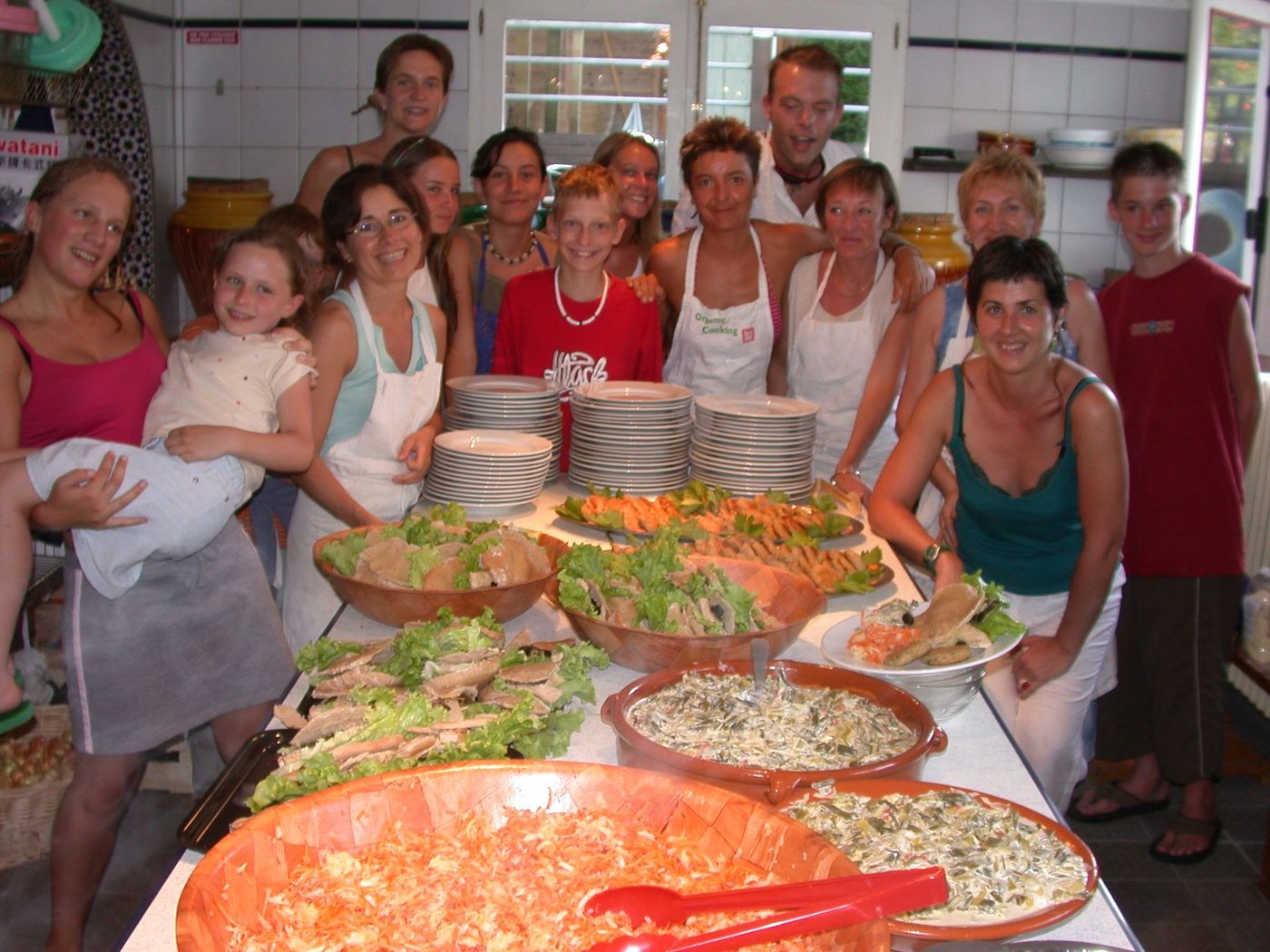
Group of participants in a teaching kitchen in front of a large buffet
Open teaching kitchen in Moliets-et-Maa, France, 2004.
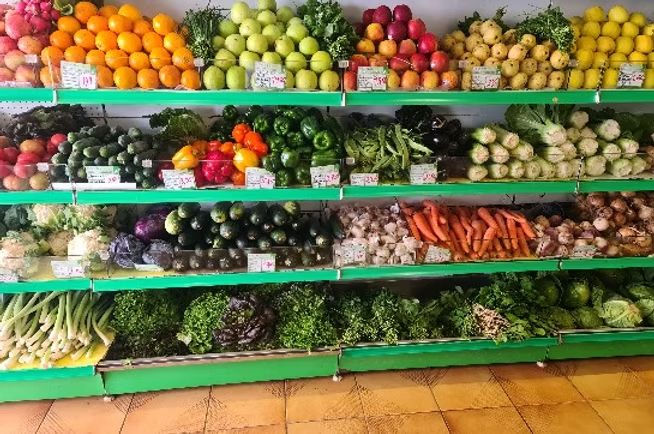
Market shelf with fresh fruit and vegetables
Seasonal fruit and vegetables.

A kitchen with care and purpose

Our kitchen draws on traditional food principles known in many cultures for centuries. At its centre is the idea of balance according to the Yin-Yang principle: food can strengthen, balance, calm or activate, depending on the situation and the need. We pay particular attention to

  • balanced, mainly plant-based whole-food cooking,
  • the quality of ingredients and fresh, seasonal produce,
  • digestibility through suitable preparation,
  • variety and taste,
  • climate, weather and the needs of the group,
  • allergies, intolerances, and cultural and personal ways of eating.

We do not prescribe any particular diet to anyone.

Learning without words

Many participants discover not only new dishes and flavours but a new relationship with food. They experience for themselves how eating can be connected with well-being, energy and mood. For many, this becomes an inspiration for everyday life.

The kitchen is open. Anyone who wants to can watch, ask and cook along. In this way it becomes a silent teacher: no lecture, but something you can feel.

Axel Bergdolt saw what this can look like in everyday life over many years in his open kitchen in Portugal: two to three days a week, young people cooked along. They learned to tell foods apart by origin, season and way of preparation and to cook balanced meals from them.

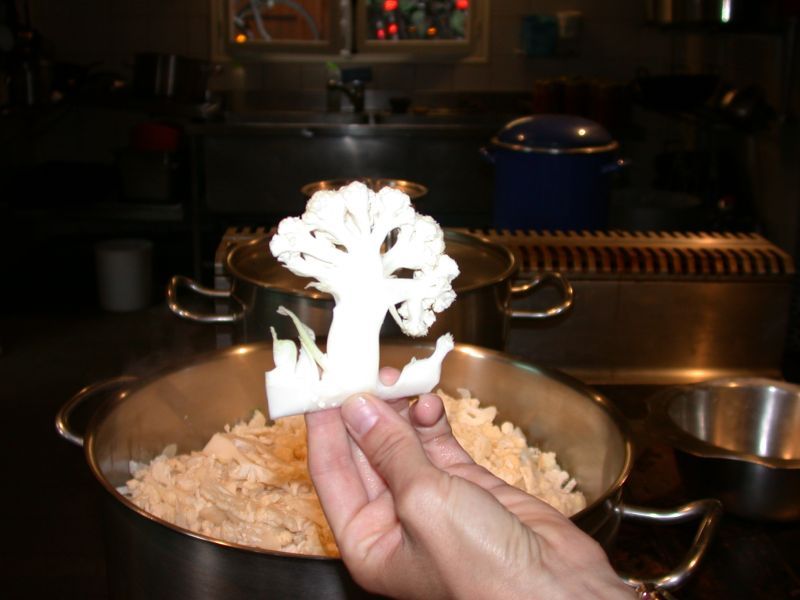
A cauliflower in cross-section: small discoveries while cooking together.
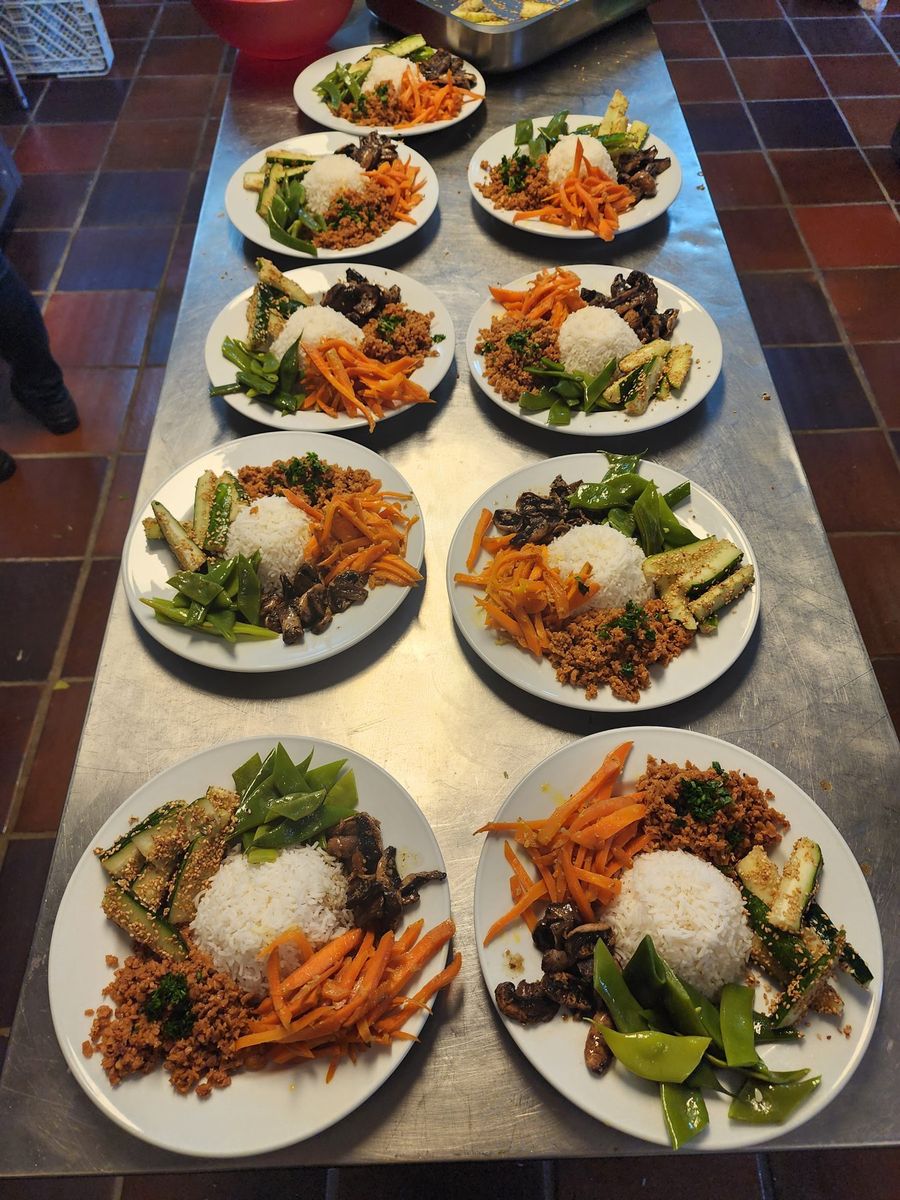
Row of plated meals with vegetables, grains and salad
Lunch at the Erasmus+ course Ritmo Vivo, Azores, October 2025.

Care and hospitality

For us, cooking is a form of attention and respect towards the people who take part in our seminars. Every meal should not only nourish but bring joy and connection and enrich the shared learning.

Our wish: that participants go home not only with new knowledge but with more energy, more inner balance and good memories of a kitchen run with heart and experience.

In traditional Eastern understanding, food becomes blood, and blood nourishes the whole body. It is seen as closely linked to emotions, thoughts and inner balance. We offer this idea as an invitation to reflect on one's own eating, not as a medical statement.

Axel Bergdolt

Our activities around food are learning activities. They do not replace medical, dietetic or psychological advice.

Article: Strengthening women – nutrition as one pillar among many

By Axel Bergdolt. Contribution to the Erasmus+ training "Women Empowerment" by Origó Műhely, Budapest, September 2026. The training was for women who have experienced violence, boundary violations or great strain, and for professionals who support them.

Nutrition does not heal trauma. It replaces neither therapy nor a safe environment nor professional help. But it can be a supporting pillar: regular, warm and balanced meals contribute to calm, sleep, energy and concentration. These are foundations for staying able to act in everyday life.

The Yin-Yang principle offers a simple orientation for this, without judgement. It knows no good or evil, but orders things by qualities such as active and calm, warm and cool, contracting and expanding. People dealing with strain and extremes can look at their own situation with some distance: not as a question of guilt, but as a question of balance. Responsibility for violence always lies with those who commit it.

In the seminar we explored simple everyday steps:

  • mainly plant-based, balanced cooking with grains, vegetables and pulses,
  • regular warm meals,
  • moderation with extremes such as a lot of sugar, alcohol or very salty food,
  • enough rest and sleep, gentle movement and breathing exercises,
  • community, for example in women's circles.

From this perspective, strength does not mean becoming harder. It means strengthening one's own centre: stable, grounded and self-determined.

Impressions from the training “Women Empowerment”, Budapest 2026. Subtitles in Italian. Video: Origó Műhely

This article is a learning resource, not advice. If you are experiencing or have experienced violence, please contact a local support service. In Germany, the national helpline "Violence against women" is free and available around the clock on 116 016.